
 For more than 80 years, Covington Electric Cooperative has powered communities across south Alabama with a mission rooted in local ownership and service. As an electric distribution cooperative, CEC serves more than 25,600 meters across 2,800 miles of power lines in six counties.
CEC’s story began in 1944, when rural families and farmers in south Alabama banded together to bring electricity to their homes and communities that commercial power companies had left behind. The Rural Electrification Act of 1936 provided low-interest federal loans for the installation of electrical distribution systems to serve rural areas of the United States, so these communities took this opportunity to come together to build the infrastructure they needed.
Today, CEC continues to reflect the cooperative spirit that made rural electrification possible. This is evident in their commitment to their communities, which extends well beyond delivering reliable, affordable power. CEC invests in local schools and families through Bright Ideas Teacher Grants and student scholarships, and supports charitable causes that members care about.
Recently, CEC contributed a combined $15,000 to two organizations dedicated to supporting and protecting children across Covington County: Covington County Child Advocacy Center and Covington County Children’s Policy Council. Through matching funds provided by CoBank, a national cooperative bank serving electric cooperatives and other rural infrastructure providers, these contributions were doubled for a total of $30,000 to enhance the impact of their work.
During National Co-op Month each October, CEC hosts Member Appreciation Days at its two offices, offering members a free employee-prepared lunch, information on benefits and services, and opportunities to share feedback directly with cooperative staff. As a cooperative, CEC uses these events to remind members that they are the owners of the business, and CEC staff are here to serve in their best interests.
CEC helps members save energy and money through an energy efficiency loan program, heat pump rebates, discounted water heaters, electric vehicle rebates, and an educational solar demonstration project that provides real-time solar output data online. CEC not only helps save energy and money, but also puts money back in members’ pockets. Fundamental to the cooperative business model, CEC returns excess revenue to members through capital credits, based on each member’s kilowatt-hour usage from the previous year.
In addition to these economic benefits, CEC also drives local economic development by participating in the U.S. Department of Agriculture’s Rural Economic Development Loan and Grant (REDLG) program, which provides zero-interest loans and grants to local businesses to promote rural economic development and job creation.
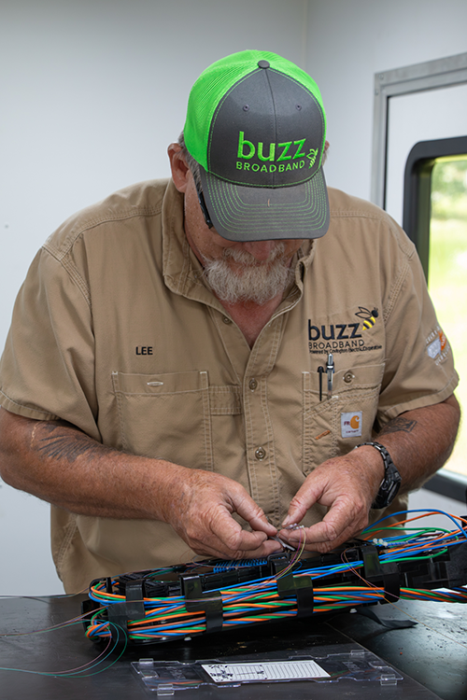
CEC invests in its own development to better serve members as well. In 2021, CEC launched Buzz Broadband, a wholly owned fiber-based internet and phone subsidiary. With about 9,200 subscribers, Buzz Broadband has exceeded CEC’s expectations and is helping close the digital gap by bringing affordable, high-speed fiber service to rural homes, businesses and schools throughout its service area.
“CEC has always been more than a power provider. It’s a trusted neighbor, an economic partner… and a steady presence that helps our communities grow, thrive and stay connected.” – Mark Parker, president and CEO
As part of this expansion into broadband and keeping pace with technological advancements like AI and how this is fueling grid modernization needs, CEC knew it also needed to change. At the beginning of 2026, they unveiled new logos to signal the co-op’s continued growth, innovation and commitment to the members and communities it serves.
“CEC has always been more than a power provider. It’s a trusted neighbor, an economic partner, a community supporter and a steady presence that helps our communities grow, thrive and stay connected,” said Mark Parker, CEC’s president and CEO. “From reliable electricity to expanding broadband access, CEC plays a vital role in strengthening our communities by delivering essential services that support daily life, opportunity and long-term progress.”
CEC has participated in National Rural Electric Cooperative Association (NRECA) initiatives, including Light Up Navajo. About 13,000 homes in Navajo Nation still don’t have power. Light Up Navajo relies on volunteer labor from electric co-ops like Covington to offset the high cost of infrastructure development.
This understanding of being part of a larger movement is also why CEC is a member of NCBA. “CEC is proud to be a member of NCBA because both [of our] organizations share a commitment to the cooperative business model and values that put people and communities first,” said Patty Singleton-Seay, CEC Marketing & Public Relations Manager. “We connect with cooperatives across industries and across the country—learning, sharing best practices and strengthening locally owned, member-driven businesses.”
CEC has never forgotten its cooperative roots. Through community service and outreach; local economic development initiatives; investment in innovative technology and services; and support to fellow electric co-ops and communities across the U.S. and internationally, CEC embraces its cooperative identity every day.