
As cooperators worldwide reflect on the 2025 International Year of Cooperatives, the stories that define it—of cooperation, resilience and shared action—are easy to find. And as climate-driven disasters become more frequent and severe, co-ops are proving they are uniquely positioned to help communities pick up the pieces.
This year, after a series of earthquakes and typhoons affected millions of Filipinos, the cooperative insurance provider Climbs disbursed more than USD$100,000 in payouts to member cooperatives and farmers. With more than 4,000 member cooperatives, Climbs provides insurance solutions designed specifically for cooperatives and grassroots communities, ensuring members are supported when disasters strike.
Climbs is also among the first international members of the Fund for International Co-operative Development (FICD), a member-led solidarity fund created in 2024 to mobilize cooperative finance for international development, crisis response and long-term resilience. Support from organizations like Climbs strengthens FICD’s vision to scale cooperative-led solutions, particularly in communities facing conflict and disaster.
“We work in partnership to unite cooperatives across the globe in a shared vision to address humanitarian crises, promote peace and build long-term economic resilience through international cooperative development and trade,” said Dr. Sarah Alldred, who heads day-to-day operations as FICD lead.
“As a solidarity fund owned by co-ops and their members, we believe in the power of a people-centered economy that puts communities first.”
“As a solidarity fund owned by co-ops and their members, we believe in the power of a people-centered economy that puts communities first.”

Concern for all communities
In the United States, convoys of electric cooperative trucks regularly cross state lines after major storms to help neighboring co-ops restore power. This mutual aid system reflects Principle 6, or “cooperation among cooperatives,” as co-ops share crews, equipment and expertise to respond quickly and collectively. Coordinated through statewide electric co-op associations and the National Rural Electric Cooperative Association (NRECA), which represents nearly 900 electric cooperatives nationwide, this helps ensure rural and hard-to-reach communities recover faster.
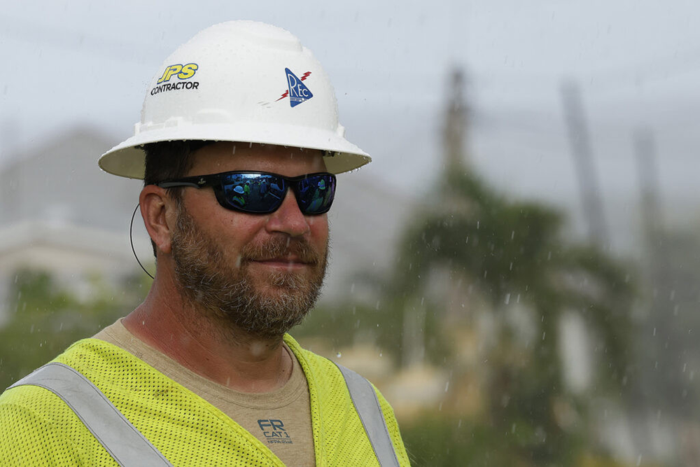
However, communities don’t have to wave the cooperative flag to receive help from the U.S. electric co-ops. In October, after Hurricane Melissa destroyed 75 percent of Jamaica’s power infrastructure, the Jamaica Public Service (JPS) reached out for help.
On December 1, 10 volunteer lineworkers from six U.S. electric co-ops arrived in Kingston with equipment and expertise. Working with JPS crews, they stayed for three weeks, worked 12-hour days and helped restore electricity to hundreds of homes in the St. Ann Parish, located in the northern part of the island.
For the volunteers, this is simply about helping people.
“In the U.S. we take mutual aid storm restoration for granted, but the people in Jamaica can’t because they are an ocean away,” said John Medved, team leader and director of safety and security at the Rappahannock Electric Cooperative based in Virginia. “As cooperatives, we have deep concern for our communities, and there are no borders when it comes to helping people.”
“As cooperatives, we have deep concern for our communities, and there are no borders when it comes to helping people.”
This volunteer effort was managed and coordinated by NRECA International, the international arm of NRECA. It wasn’t the first time American electric co-ops responded to a call for help from Jamaica. In July 2024, Hurricane Beryl struck the island nation and many communities on the southern coast were without power. That was the first time JPS reached out to NRECA International for assistance.
Ingrid Hunsicker, NRECA International’s senior program manager who oversees the robust volunteer program, turned to NRECA’s electric co-op member network when the call for help came in, and the response was quick.
“We have a very active network of volunteers, and many lineworkers were ready to pack their bags right away,” Hunsicker said. “Within a week, the team was assembled and was on its way to Jamaica.”
Filling in the gaps
Co-op leaders know the cooperative business model is uniquely positioned to respond in times of crisis. The dismantling of the U.S. Agency for International Development (USAID) in early 2025 created a significant gap in support for international cooperative development, underscoring the urgency of alternative, co-op-led solutions.
“Cooperatives are formed to meet the evolving needs of their members,” said Emily Varga, former senior advisor of USAID’s Cooperative Development Program. “When there is an external shock—financial, political, environmental—cooperatives are rooted in serving their members, and they are structured to utilize their resources to do so, rather than aggregate profits for shareholders.”
The sweeping USAID funding cuts snatched away a lifeline for sustainable, community-led progress in over 130 countries. Organizations like FICD are working to advance the principles of cooperation and mutual support to fill this gap.
“We have an important role to play in filling the gap left by USAID,” Alldred said. “The Fund can ensure that cooperatives can step in when communities need them most—bridging critical gaps, strengthening co-op-to-co-op support, and building long-term resilience in times of crisis.”
“Cooperatives can step in when communities need them most—bridging critical gaps, strengthening co-op-to-co-op support, and building long-term resilience in times of crisis.”
In Jamaica, co-ops are also filling in the gaps for their communities. Credit unions across the country are coordinating relief efforts alongside the Caribbean Confederation of Credit Unions (CCCU) and CUNA Caribbean to deliver 1,000 care packages, tarps and bottled water to affected communities in the hardest-hit areas. The Worldwide Foundation for Credit Unions (WFCU) has activated its Project Storm Break disaster relief initiative in response to the hurricane, through which it will work with the CCCU Development Foundation and the Jamaica Cooperative Credit Union League (JCCUL) to assess the needs of credit union members and staff, providing emergency and long-term recovery support.
Thanks to the electric co-op volunteers, hundreds of homes and businesses in the St. Ann parish in the northern part of the island now have power. For Medved, an experienced volunteer who also travelled to Jamaica last year after Hurricane Beryl, it was a reminder that the work of cooperatives is always about the people.
“I traveled to Jamaica because it was the right thing to do,” he said. “Sometimes, doing the right thing isn’t easy, but a temporary challenge in my life can make a huge impact for others.”