
 Across the country, communities are confronting a housing crisis marked by rising costs, displacement, widening racial and economic inequities, and development approaches that extract rather than build value.
Policymakers, philanthropy and community leaders are concerned with not only how much housing gets built, but who controls it, how it is governed, and whether it creates long-term stability and wellbeing.
Cooperative and shared equity housing models offer a powerful answer. They give residents a meaningful stake in their homes and communities, support democratic decision-making, and help preserve affordability for the long term.
That opportunity is especially timely. On July 10, the 21st Century ROAD to Housing Act—which includes promising support for affordable housing, including cooperative housing and other community-centered approaches to homeownership—was enacted into law. The bipartisan momentum behind the legislation is an important recognition: communities need more tools to preserve and create safe, stable and affordable homes.
A practical guide for creating housing cooperatives
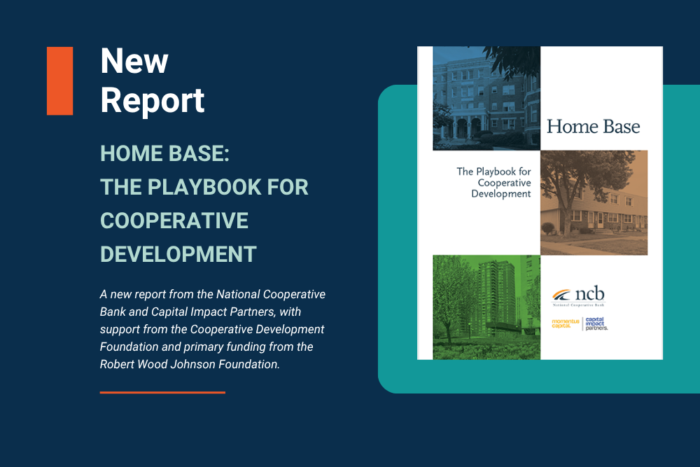
Home Base is a how-to manual for organizers, practitioners and communities interested in creating housing cooperatives. This new edition includes template forms, worksheets, guidance and practical tips that developers can use as they move from idea to implementation.
As the playbook explains, communities are stronger when residents have a “home base”—a place to call their own, a place that creates a stake in community, and a place that helps keep people safe. Yet for too many families, safe, affordable, stable housing remains out of reach. Cooperatives can help change that. They offer a resident-centered ownership model that can reduce monthly housing costs, build equity over time without pricing out future generations, and give residents a voice in the decisions that shape their homes.
Lessons from the Affordable Housing Initiative
Since 2023, with support from the Robert Wood Johnson Foundation, CDF has worked to expand understanding of shared equity housing models.
By engaging and convening practitioners, researchers, technical assistance providers, funders and community leaders across the country, CDF not only strengthened the field through connections, knowledge sharing and new resources like Home Base, but also took away lessons that can inform future work to promote affordable housing.
Three lessons stand out:
1. Power and governance matter as much as ownership
Ownership is important, but ownership alone is not enough. Communities consistently emphasized that democratic participation, accountable governance and leadership development are what distinguish cooperatives and shared equity housing from many traditional affordable housing approaches.
For communities facing displacement and long-standing underinvestment, equity must include control: control over land, institutions and decisions that shape the future.
- Integrate community-led problem solving, democratic practice, and wealth-building through a mix of affordability and home equity;
- Equip residents with data, technical support and clear information about benefits and tradeoffs; and
- Develop diverse, next-generation cooperative leaders who reflect the communities most affected by housing instability.
2. Permanently affordable housing is economic infrastructure
Stable housing is foundational to thriving communities. It supports workforce retention, public health and local economic stability.
Communities can choose the models that fit their needs, including limited equity cooperatives, where residents collectively own and govern their housing while keeping it affordable for future generations; community land trusts, where residents own or lease their homes on land a nonprofit owns, keeping the cost of housing down; resident-owned communities, where manufactured housing residents collectively purchase the land beneath their homes; and other forms of community ownership. Shared equity housing models help preserve affordability, prevent displacement and restore local control over land and development.
Shared equity models are a practical pathway from renting to owning. These models offer stability, affordability, equity and agency without exposure to speculative risk. In short, they are sustainable, elegant solutions to common housing challenges.
3. Public-sector partners are essential for scale
Cooperative and shared equity housing models can grow when public-sector partners help align policy, funding and technical assistance with community ownership.
Cooperative and shared equity housing models can grow when public-sector partners help align policy, funding and technical assistance with community ownership.
Too often, existing housing and economic development programs were designed for investor-driven structures and do not fit resident-controlled models. This misalignment is especially clear in affordable housing finance. Given growing interest in developing cooperatives on community land trusts—viewed as faster, more feasible pathways to preservation—removing barriers is critical to helping communities preserve affordable housing and create new ownership opportunities.
Local governments can also be catalysts. Cities such as New York, Washington, DC and Chicago show what is possible when shared equity models are integrated into housing policy through legal frameworks, staffing, financing and stewardship infrastructure. The Urban Homesteading Assistance Board (UHAB)’s map of limited equity housing cooperatives across the country and Grounded Solutions’ map of CLTs and similar models illustrate where shared equity housing is thriving.
But partnership requires trust. For many communities of color, government is experienced as a contributor to exclusion and displacement. Effective public-community partnerships require consistency, transparency, representation and shared power.


What comes next
As CDF concludes this learning grant, we are passing the baton to our sister organization, the National Cooperative Business Association, to lift up critical lessons, bring partners together, promote a strong data infrastructure and advance policies that support shared equity housing.
We are grateful to the many advisors, partners, practitioners, researchers and community leaders who shaped this effort, particularly our core advisors: UHAB, National Association of Housing Cooperatives, ROC USA® and Grounded Solutions. Their expertise helped build tools, reports, webinars and shared knowledge that will continue to serve the field.
CDF’s future work will focus on building the capacity of the cooperative community by:
- Raising awareness of the model and developing cooperative leadership;
- Connecting and aligning co-op support organizations; and
- Learning and sharing what it takes to create vibrant and interconnected cooperative economies.
Guided by this strategy, we will continue to support the urgent work of advancing shared equity housing in new ways, such as building the leadership of housing co-op leaders, promoting greater access to loans that make cooperative housing possible, and fostering connections between housing co-ops and other types of co-ops in specific geographies. And we look forward to championing and supporting NCBA as it expands housing cooperative advocacy, development and infrastructure.
Communities need durable tools to create homes that are affordable, democratic and rooted in local control.
Communities need durable tools to create homes that are affordable, democratic and rooted in local control. Housing cooperatives are one of those tools. With the updated Home Base playbook, organizers and communities have a practical starting point to build them.